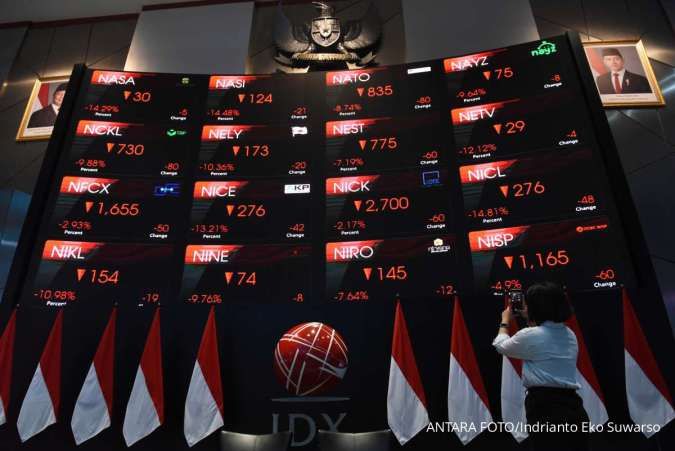
KONTAN.CO.ID - JAKARTA, Oct 21 - Indonesia's central bank kept its benchmark policy rate unchanged on Wednesday, though it hiked its overnight deposit rate and cut its reserve requirement ratio in an effort to address market volatility and support job creation. The moves came days after the country's stock market experienced a record-breaking two-day trading rout, a fall that was steeper than any recorded during the Asian financial crisis, triggered by an MSCI warning that it could move Indonesian equities to "standalone" market status.
Baca Juga: Bank Indonesia to Deliver Policy Rates Decision as Capital Market Reels from Chaos The rout renewed pressure on the rupiah. The currency weakened slightly after Bank Indonesia's announcement and remains this year's worst-performing emerging Asian currency, having lost over 7% against the US dollar. BI kept its benchmark 7-day reverse repurchase rate at 5.75%, as expected by 15 of 29 economists in a Reuters poll. The rest expected a hike of at least 25 basis points (bps). It left its rate to lend overnight to banks unchanged at 6.50% and raised the overnight deposit facility rate by 25 bps to 5%. The reserve requirement ratio (RRR) will be reduced to 8% from 9% by the start of November and to 7% on December 1, a move that would free up 190 trillion rupiah ($10.56 billion) for the banking system, Governor Destry Damayanti said. Its liquidity incentive mechanism would also be adjusted. "Because we are addressing multiple challenges, we need to address them with different policies," BI Deputy Governor Solikin M. Juhro said.
Baca Juga: GLOBAL MARKETS-Asian Stocks Climb as Strong Earnings Buoy Wall Street Solikin said the deposit facility hike was intended to support market stability, while the RRR reduction would give banks greater flexibility to lend, which could create jobs. Gareth Leather, senior Asia economist at Capital Economics, said the moves were "very confusing." "I think they are trying to do two things at once (support the rupiah and boost growth), which I am not sure is possible," Leather said. "Either way, they risk further undermining their credibility. The rupiah has fallen back a bit after the announcement." Irman Faiz, an economist with Bank Danamon in Jakarta, said the deposit facility rate hike could help prevent additional liquidity from the RRR cut from pushing money market rates too low while weakening the rupiah carry.
Baca Juga: Indonesia Stock Exchange Cuts Lower Limit for More Stocks to Cool Volatility FURTHER DISCOUNT FOR FX HEDGING BI will provide more discounts for FX hedging by using domestic non-deliverable forward instruments, in an effort to make rupiah assets more attractive to foreigners, Destry said. BI has given discounts for FX hedging costs in the past few months, which Destry said attracted $9.9 billion in capital inflows. About MSCI, Destry said: "We remain vigilant regarding developments in our capital market, and we are, of course, monitoring the capital outflows that are taking place."
She said BI's past rate hikes totalling 100 bps were enough to anchor inflation.
Baca Juga: Indonesia Battles to Stabilise Market after MSCI Expulsion Threat The rate hikes, which BI delivered in three moves between May and June, were made when the rupiah was weighed down by cooling investor sentiment. The rupiah hit an all-time low in June. Analysts and investors have been concerned about fiscal sustainability amid President Prabowo Subianto's populist spending plans and expensive fuel subsidies, as well as worries about central bank independence.