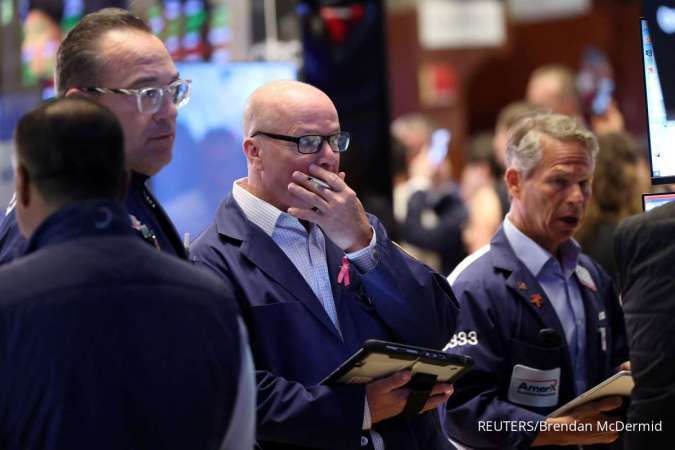
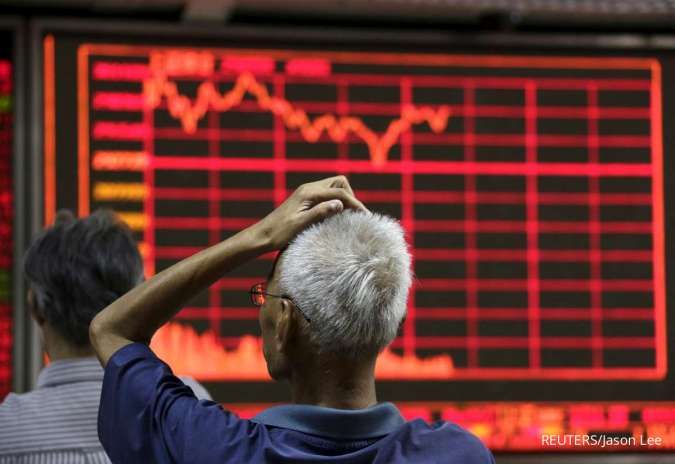
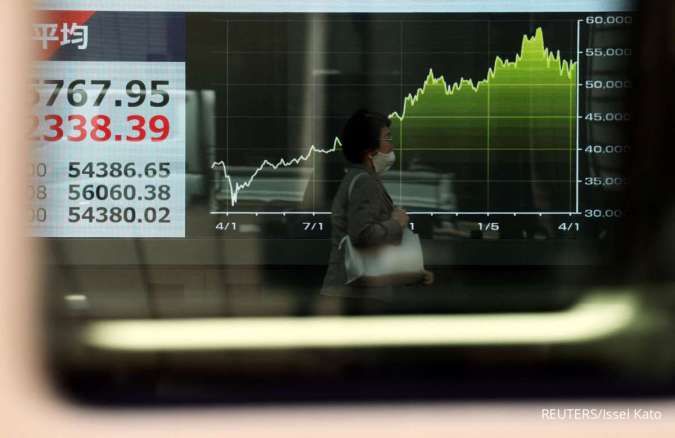
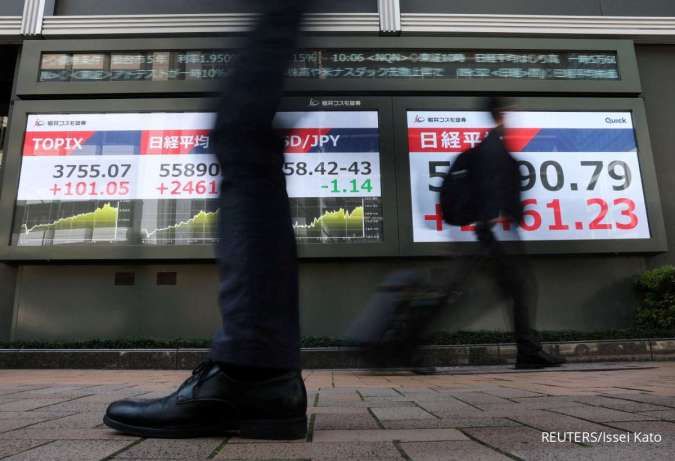
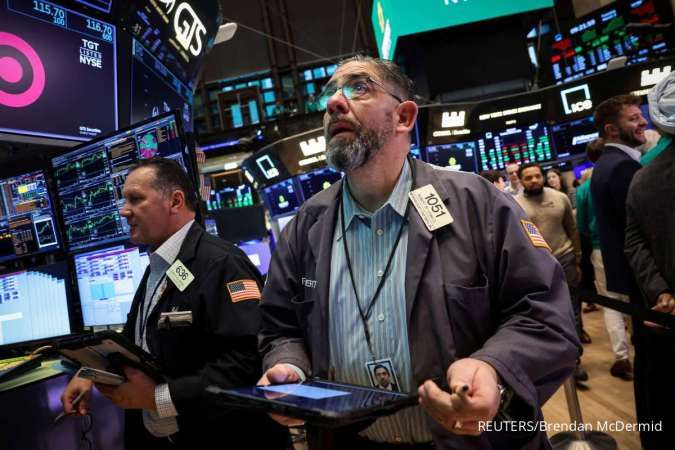
KONTAN.CO.ID - SINGAPORE. A rout in chipmakers dragged stock indexes lower on Friday, with the risk aversion compounded by renewed tensions in the Middle East, while oil prices were set for their sharpest weekly rise in three months. Investors rotated out of semiconductor plays into other sectors such as banking after robust earnings from major lenders, leaving Asia vulnerable to the selloff given its heavier exposure to chips. MSCI's broadest index of Asia-Pacific shares outside Japan slid more than 2% while the Nikkei sank nearly 6%.
Nasdaq futures lost 1.5% and S&P 500 futures declined 0.9%. EUROSTOXX 50 futures were down 1.1%, while DAX futures edged 0.85% lower. Stocks in Taiwan were hit hard by the selloff, falling 5.7% , while markets in South Korea were closed for a holiday.
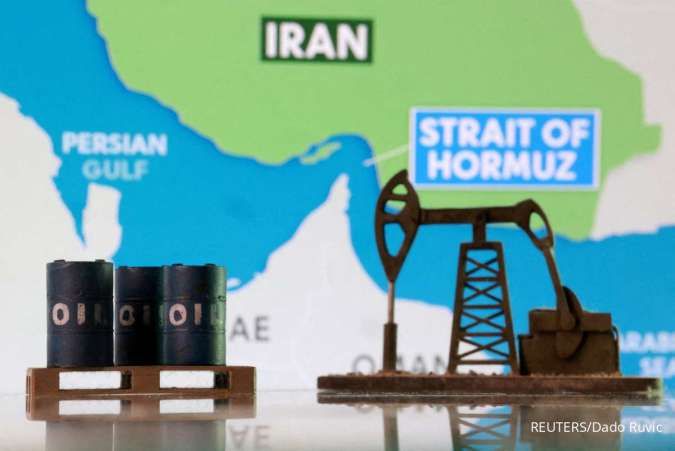
Baca Juga: GLOBAL MARKETS-Chipmakers Put Pressure on Equity Indexes Globally, Oil Dips South Korean authorities on Thursday announced they will temporarily ban new listings of exchange-traded funds (ETFs) that are tied to certain major technology firms, while raising minimum required deposits for retail investors to invest in such products, in an effort to curb volatility. In China, the CSI300 blue-chip index was down 2.45%, while Hong Kong's Hang Seng slid 2%, led by losses in technology shares. "Asia's AI trade thesis is being tested again. After a strong rally so far this year - led by semiconductors - concerns have resurfaced about potential overcapacity in the AI build-up," said analysts at HSBC. "A tougher question is how long the AI cycle can realistically run. Are we already at the late stage of the cycle? Has it peaked? It is an important question, and the reality is that it is difficult to time the market. That said, the fundamentals still look solid." Oil prices were on the rise, with Brent crude futures up 1% to $85.09 a barrel, while U.S. crude advanced 1.2% to $79.90 per barrel. Iran said it launched fresh attacks on U.S. facilities in the Gulf on Friday after a sixth consecutive night of U.S. strikes on Iranian military facilities, as last month's truce descended into daily attacks and counterattacks. For the week, Brent and U.S. crude futures were set to rise more than 11% each, marking their largest gains since April.
Baca Juga: Indonesia's FDI Jumps In Second Quarter, Investment Minister Says "The U.S. and Iran are further away from seeing eye-to-eye," said Thierry Wizman, global FX and rates strategist at Macquarie. "The next few days may determine â??which side has 'overplayed its hand', but not without the risk of seeing some oil infrastructure destroyed in the process." Trade tensions also returned to the fore, after the U.S. imposed new 25% tariffs on â??Brazil.
ASSESSING THE FED RATE PATH
In currencies, the dollar held steady on Friday and was set to end the week little changed as receding expectations of Federal Reserve rate increases this year were offset by renewed safe-haven demand. Investors are now pricing in roughly 27 basis points worth of Fed hikes by December, following benign U.S. CPI and â??PPI readings this week. The euro was down slightly at $1.1436 while sterling fetched $1.3459. The yen, meanwhile, languished near a 40-year low and last stood at 162.41 per dollar, prompting renewed jawboning from Japanese Finance Minister Satsuki Katayama to try and support the currency.
Baca Juga: GLOBAL MARKETS-Asian Shares Slump on Chipmaker Drag, Bonds Cheer Cooler Inflation Much of the market's focus has also been on a potential allocation shift by Japan's GPIF and other pension funds, after Katayama said last week the government aims to steer the country's vast state pension funds to "substantially" increase investments in domestic assets. "We think the expectations of repatriations by Japanese investors could, for a certain period, provide support for higher equity prices and lower (Japanese government bond) yields," said Daiju Aoki, regional chief investment officer for Japan and chief Japan economist at UBS Wealth Management. "However, market movements that extend beyond what is justified by economic growth and corporate earnings fundamentals are unlikely to be sustained over the longer term." Elsewhere, spot gold was up 0.3% at $3,981.44 an ounce.