KONTAN.CO.ID - JAKARTA — Business confidence regarding Indonesia's macroeconomic landscape has deteriorated sharply heading into the late stretch of the year, driven by a convergence of high global interest rates, intensifying inflation risks, and structural currency depreciation. According to the Q3-2026 Banking Survey report released by the Financial Services Authority (OJK), the country's Macroeconomic Conditions Expectation Index (IKM) collapsed by 24.3%, dropping to a reading of 28 from a solid 37 logged in the previous quarter. This significant drop officially drags corporate sentiment into the pessimistic zone as local and foreign business operators brace for a more moderate Gross Domestic Product (GDP) growth trajectory. Baca Juga: China’s Midea Hits 3 Million Units in Indonesia, Boosts Global Export Hub
The Evaporating Cushion of Seasonal Consumer Booms
Financial analysts note that the expected economic slowdown stems primarily from the expiration of key festive and holiday cycles that previously shielded domestic economic activity.
- Q1-2026: Rebound driven by the massive household consumption and government spending surrounding the Ramadan and Eid al-Fitr holidays.
- Q2-2026: Domestic demand was sustained by the annual school holiday period, which traditionally boosts consumer mobility and transport metrics.
As the economy normalizes in Q3-2026, underlying consumption is flashing warning signs. Bank Indonesia’s Consumer Confidence Index (IKK) contracted from 117.8 down to 116.8. This shift underscores a growing wariness among the vulnerable middle-class demographic, whose purchasing power remains heavily squeezed by persistent core inflation.
Pre-emptive BI-Rate Hikes and Flirting with Rp17,800/USD
To combat global volatility, Bank Indonesia (BI) is expected to implement aggressive, pre-emptive monetary policy tightening. The central bank is projected to lift the benchmark BI-Rate above its current 5.75% cushion—which had already been aggressively bumped by 100 basis points from a baseline of 4.75%.
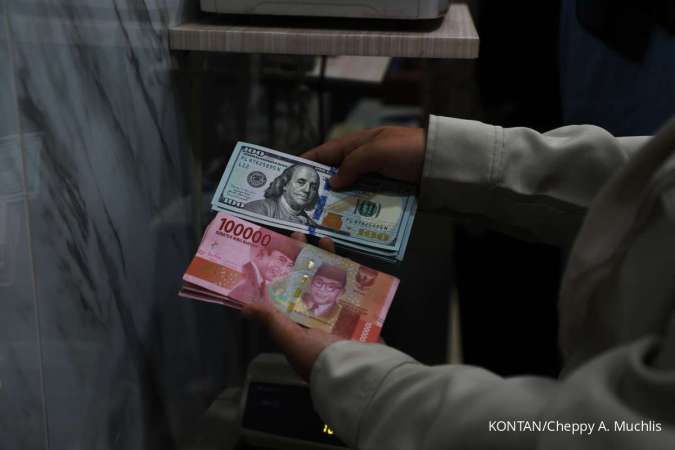
This defensive stance is explicitly designed to safeguard the local currency. The Indonesian Rupiah is forecast to weaken further, falling past its late June benchmark of Rp17,856 per US Dollar. The pressure on the currency is exacerbated by a hawkish Federal Reserve framework and surging US Treasury yields, which continue to suck global liquidity out of emerging markets.
Double Whammy: El Niño Shocks and Geopolitical Drag
Compounding the monetary strain, Indonesia faces structural imported inflation. The combination of non-subsidized fuel (BBM) adjustments, rising global energy costs, and an escalating geopolitical crisis in the Middle East threatens to swell the nation's oil import bill, squeezing its current account surplus. Domestically, the onset of a disruptive El Niño climate cycle spanning Q3 and Q4-2026 introduces an immediate risk of volatile food price inflation.
While the headline Purchasing Managers’ Index (PMI) managed to hold onto expansionary territory at 50.2, the narrow margin proves that the manufacturing sector is operating at a heavily moderated speed. For international institutional investors, the combination of a weakening Rupiah, corporate tax strains, and a hawkish monetary defense implies that entering the Indonesian market at this stage demands high liquidity buffers and a highly selective corporate credit strategy.